Many entrepreneurs invest thousands of euros in a sleek logo, a nice color palette, and a new website, calling that their "brand". That is understandable, as those things are tangible and visible. But a logo is not a brand strategy. At best, it is the outside of a story you still need to write. For Belgian SMEs and self-employed professionals who want to grow, this distinction is no detail. It is the difference between a business that is recognized and a business that sells, retains, and attracts customers without having to convince them anew every time. This article explains what a real brand strategy entails, why it is more relevant to you as an entrepreneur than you think, and how you can practically get started with it.
Table of contents
- Quick insights
- What exactly is a brand strategy?
- The difference between a logo and a brand strategy
- Why every SME needs a brand strategy
- Brand positioning: the core of your brand strategy
- The five building blocks of a strong brand strategy
- Comparison: three approaches to brand strategy
- Frequently asked questions
- Sources
Quick insights
Key insight · Explanation
A logo is not a brand — A logo is a visual element. A brand is the total experience customers have with your business, from your website to your customer service.
Brand strategy determines your positioning — Without clear positioning, your potential customer does not know why they should choose you over a competitor.
Consistency builds trust — Customers who consistently encounter your message, tone, and look build trust faster. Trust leads to purchases.
Positioning requires making choices — Brands that try to appeal to everyone are rarely remembered. A sharp target audience choice is stronger than a broad message.
Brand purpose precedes aesthetics — Why does your company exist? That answer is the foundation. The visual identity follows afterwards, not the other way around.
Brand strategy makes marketing more efficient — With a clear strategy, you don't have to re-invent who you are and what you communicate every time. That saves time and money.
Internal strength is just as important — Your brand strategy guides not only your external communication, but also your internal decisions about pricing, partners, and staff.
What exactly is a brand strategy?
A brand strategy is a long-term plan that determines how your company positions itself in the market, what values it conveys, and how it differentiates itself from competitors. It goes beyond a logo or color palette. It is about the promise your company makes to its target audience, and how that promise is consistently delivered at every touchpoint, from your website to your quote to the post-sale phone call.
In practice, brand strategy is described as the intersection of three elements: brand purpose (why does your company exist?), brand promise (what does your brand promise?), and brand personality (how does your brand communicate?). Together, these three form the foundation of a recognizable and credible brand identity.
What brand strategy is not: a marketing campaign, a corporate identity guide, or a tagline. These are all expressions of the strategy, but they are not the strategy itself. The strategy is the foundation beneath everything you do.


The difference between a logo and a brand strategy
A logo can be powerful, but without direction, it lacks meaning. Compare it to a house without a foundation: it might stand for a while, but in the long run, it starts to wobble. Many SMEs run into this sooner or later. The logo was once quickly designed without thinking deeply about positioning, target audience, or brand story. Years later, it no longer fits. Customers see something different from what you want to project.
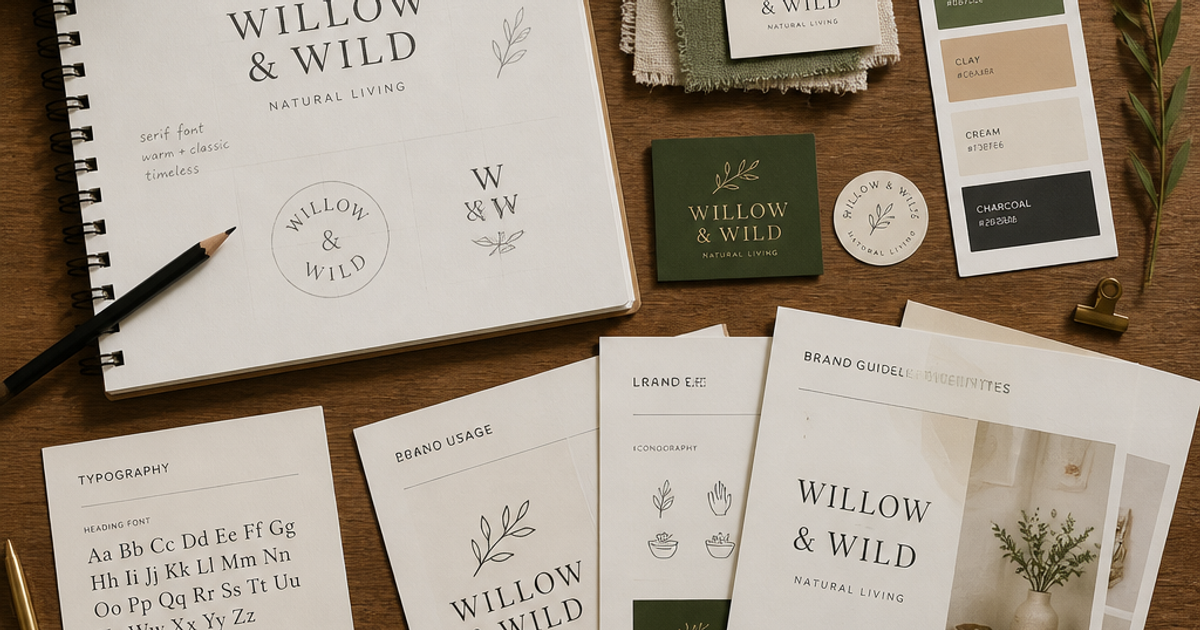
A common mistake is that entrepreneurs think a new logo or an updated website is equivalent to a rebrand. It is not. A sleek logo or a pretty color palette is not a strategy. Without a clear brand position, branding remains superficial: it is packaging without content.
"Brand strategy is not about how you look, but about what you stand for, who you are there for, and which choices you dare to make consistently."
When your brand strategy is clear, you notice that everything becomes easier. Your marketing gets more focus, your choices become more consistent, and customers recognize faster whether you are a fit for them. The logo is then no longer the brand itself, but a visual translation of a story that is already rock solid.
Tip: Ask three employees or three regular customers to describe in one sentence what your business stands for. If those answers differ significantly, a clear brand strategy is missing.
Why every SME needs a brand strategy
Large corporates can invest in ad campaigns for years until the name alone creates recognition. SMEs do not have those budgets. That is why brand strategy for a smaller business is not a luxury, but a necessity. Your brand must make clear at a glance who you are, what value you add, and why you matter, without requiring a multi-million budget.
Trust is the shortest path to a sale
When customers regularly and consistently encounter your message, colors, and tone, they begin to associate your business with certain values and qualities. That trust is essential: consumers are more inclined to do business with brands they know and trust. Without trust, there are no sales, for both service providers and product companies.
A strong brand strategy helps you stand out in a saturated market and increases the likelihood that customers recognize and trust your company. Strong brands convert better. Branding therefore has a direct impact on your revenue and growth, not just on how you look.
Brand strategy makes marketing cheaper
With a clear brand strategy, you don't have to rethink who you are and what you say every time. Every marketing decision, from an ad to a LinkedIn post to a quotation template, logically follows from the strategy. That makes communication more efficient and consistent, saving significant time and money in the long run.
Furthermore, a strong brand identity increases loyalty because customers resonate with your story. And loyal customers bring in new customers. That organic effect is more valuable for an SME than any one-off ad campaign.
Business value increases
A brand is also a business asset. Companies with a strong brand identity are recognized faster, remembered more often, and have a higher perceived value. That translates into higher prices customers are willing to pay, as well as a higher business value if you ever sell or attract investors. A logo does not have that value on its own. The strategy behind it does.
Brand positioning: the core of your brand strategy
Brand positioning is the way your brand distinguishes itself in the consumer's mind relative to competitors. It is the answer to the question: why you and not the other? That answer is rarely found in product features alone. It lives in feeling, values, and context.
Effective positioning begins with deep insight into your target audience. Not superficial, but concrete: what drives them, what challenges do they face, what do they care about? Next, you look at the market. Where is there space, what are competitors already shouting, and where can you differentiate yourself in a credible way? Then comes the hardest part: choosing. Not the safest message, but the most fitting one.
Positioning is not a one-time exercise
A common mistake in brand positioning is that companies treat it as a finished task. Positioning is not a one-time exercise. Check whether your message comes across as intended. Does your target audience understand you? Does your promise align with the experience customers have? Monitor how your brand is received and be prepared to adjust where necessary.
Positioning and branding are not separate steps, but together form the core of your brand strategy. Positioning determines the direction; branding ensures the recognizable translation. A brand that positions itself as open and human-centric chooses accessible language, warm colors, and informal communication. A brand that wants to project authority prefers sleek shapes and businesslike language. Those choices stem directly from positioning.
Tip: Write a positioning statement for yourself in one sentence: "For [target audience], [your company] offers [promise], unlike [competitor], because [proof]." If you cannot complete that sentence clearly, your positioning is not sharp enough yet.
The five building blocks of a strong brand strategy
A brand strategy is not a hundred-page document. It is a set of clear choices that provide direction. In practice, these are the five building blocks that together form a robust brand strategy:
1. Brand positioning
Who are you, who are you there for, and why is that relevant? This is the foundation of everything. Without clear positioning, the rest of your communication floats. Brands that try to appeal to everyone are rarely remembered.
2. Brand values
Brand values are the principles that guide your organization's behavior, both internally and externally. They are not the same as a mission statement, but they underlie it. Strong brand values are specific, authentic, and distinctive. They help in making decisions, attracting the right employees, and building customer loyalty.
3. Brand personality and tone of voice
How does your brand communicate? Formal or informal? Warm or businesslike? Direct or nuanced? These choices determine how customers experience you at every touchpoint, from your website to your emails to your social media. Consistency here is everything: if your tone constantly changes, you lose credibility.
4. Brand story
Every strong brand has a story. Not a list of services, but a narrative that explains why you exist, what drives you, and who you want to help. That story is the emotional connection between your business and your customer. People don't buy the best product; they buy the brand that feels most familiar to them.
5. Visual identity
And only then comes the logo. The visual identity, from color palette to typography to photography style, is the tangible translation of everything before it. It makes the strategy visible. But without the previous four building blocks, a visual identity is merely aesthetics without meaning.
Comparison: three approaches to brand strategy
Not every entrepreneur approaches brand strategy the same way. Below, we compare three common approaches found in the market, with their pros and cons for SMEs.
Approach · What it entails · Suitable for SMEs?
Logo-first approach — First have a logo designed, then build communication and marketing around it. Strategy follows (or never) afterwards. — No. You build from the outside in, without a foundation. The logo lacks meaning and the message isn't right.
Strategy-first approach — First determine positioning, brand values, and brand story. Then align visual identity and communication accordingly. — Yes. This is the most sustainable approach. Every decision flows from a clear core, yielding consistency and recognition.
All-in-one agency approach — An agency guides strategy, visual identity, website, and marketing as one integrated process. Strategy and execution are aligned. — Yes, provided the agency works strategically and doesn't just execute. This prevents strategy and design from being developed separately and failing to match later.
The strategy-first approach delivers structurally better results for SMEs. When positioning, brand values, and brand story are clear before design begins, every subsequent step, from logo to website to campaign, works in the same direction. That prevents costly revisions and inconsistent communication later on.
Frequently asked questions
What is the difference between a brand strategy and a brand identity?
Your brand strategy determines the course and positioning of your brand: what you stand for, who you are there for, and how you differentiate yourself. Your brand identity is the visual and communicative translation of this, from logo to tone of voice. Strategy forms the basis; identity makes it visible. Both are inextricably linked, but the order counts: strategy comes first.
Does a small SME or self-employed professional also need a brand strategy?
Brand strategy is essential, especially for small businesses. You don't have a large advertising budget to buy recognition. Your brand must make clear at a glance who you are and why customers choose you. A clear strategy does that job, more consistently and cheaply than any advertising campaign.
How long does it take to develop a brand strategy?
A thorough brand strategy for an SME typically requires a few weeks of intensive guidance and reflection. This includes discussions about target audience, competition, values, and positioning, followed by translation into a brand story and communication guidelines. Whoever skips that process and goes straight to design pays the price later in inconsistency and missed opportunities.
What is brand positioning and why is it so important?
Brand positioning is the place your brand occupies in the mind of your target audience relative to competitors. It is the answer to why customers choose you. Without clear positioning, you are replaceable. With sharp positioning, you become the obvious choice for the right customer.
Can I adjust my brand strategy later on?
Yes, and that is sometimes necessary. Markets change, your target audience evolves, and your business grows. A good brand strategy is a living document, not carved in stone. Rebranding is renewing or adjusting an existing brand when it no longer fits your target audience, growth ambitions, or market position. That is not a sign of weakness, but a sign of strategic awareness.
How do I know if my current brand has a clear strategy?
Ask yourself three questions: Can my employees explain in one sentence what our business stands for? Do my customers recognize our tone and message as consistent across all channels? Do I know exactly why a customer chooses us over a competitor? If you doubt any of these questions, a clear brand strategy is missing.
How much does it cost to have a brand strategy created?
The cost varies greatly depending on the depth of the process and the agency you engage. A strategy process with a specialized agency typically includes positioning workshops, target audience analysis, competitor research, and fleshing out brand values and brand story. At Iconic Creative Agency, you can start with a free strategy consultation to discover what your brand needs. That way, you only invest once the direction is clear.
Have you already developed a brand strategy for your business, or do you still work purely based on a logo and gut feeling? Share your experience below, because your approach could help other entrepreneurs.
Sources
- Why brand strategy is more than a logo: explanation for entrepreneurs
- Brand strategy is more important than your logo: practical explanation for SMEs
- What is a brand strategy? Comprehensive explanation including brand positioning
- The difference between positioning and branding within your brand strategy
- Brand positioning in marketing: how to take a distinctive position