Most startups obsess over acquisition. They pour budget into ads, SEO, and outbound - then watch a good chunk of those hard-won customers quietly disappear within 90 days. That is not a marketing problem. That is a retention problem. Retention marketing for startups is the discipline of systematically keeping customers engaged after they first buy or sign up, and it is arguably more valuable than any acquisition channel you are currently running. Acquiring a new customer can cost 5 to 25 times more than keeping an existing one, and improving retention by just 5% can lift profits by 25% to 95%. If your startup is leaking customers, this guide is your patch kit.
Table of Contents
- What Is Retention Marketing (And Why Startups Get It Wrong)
- Quick Takeaways
- The Churn Problem Every Startup Faces
- Onboarding: Your First and Most Critical Retention Lever
- Retention Marketing Tactics That Actually Work
- Comparing Retention Approaches for Startups
- Metrics You Must Track to Reduce Churn
- Common Mistakes Startups Make With Retention
- Frequently Asked Questions
- References
What Is Retention Marketing (And Why Startups Get It Wrong)
Retention marketing is the set of communication tactics and programs a business uses to keep existing customers engaged, buying again, and less likely to leave. It includes personalized email campaigns, loyalty incentives, proactive customer success outreach, win-back sequences, and feedback loops that make customers feel heard. The goal is to transform a one-time transaction into an ongoing relationship.
Where startups go wrong is structural. The growth team is rewarded for new signups. The product team ships new features. Nobody owns the question of what happens to customers after they convert. Retention gets treated as a customer support issue rather than a marketing priority - and by the time leadership notices the churn rate, months of compounding damage have already been done.
Retention marketing is not the same as customer service. Customer service is reactive. Retention marketing is proactive. It anticipates when a customer might drift away and intervenes before they decide to leave, not after.
Quick Takeaways
Key Insight · Explanation
Onboarding is your highest-leverage retention moment — Around 44% of subscription cancellations happen within the first 90 days. A structured onboarding sequence that gets customers to their first value moment fast is your single biggest lever against early churn.
Churn is a product signal, not just a marketing problem — If customers consistently leave after hitting a specific feature or workflow, that is product feedback. Retention marketing and product development must share churn data to fix root causes, not just symptoms.
Personalization is not optional at scale — Retention programs that rely on unified customer data and personalized outreach consistently outperform generic broadcast campaigns. Segment by behavior, not just by plan or signup date.
Net Promoter Score predicts retention risk early — NPS is not a vanity metric. A falling NPS score is an early warning sign that churn is coming. Track it per cohort and per customer segment, not just as a company-wide average.
Startups can tolerate higher monthly churn than mature companies, but not indefinitely — Early-stage startups may see 5 to 10% monthly churn while finding product-market fit. But once you have a validated offer, the target shifts to under 2% monthly. Know which phase you are in.
Closing the feedback loop builds retention on its own — Soliciting feedback via surveys and then visibly acting on it - and telling customers you did - is one of the most underrated retention tactics. Customers who feel heard stay longer.
Revenue retention matters more than headcount retention — Net Revenue Retention (NRR) tracks whether existing customers are growing their spend over time. A startup with 105% NRR can grow revenue even with some customer churn, because expansions outpace losses.
The Churn Problem Every Startup Faces
Churn is the percentage of customers who stop doing business with you during a given period. The formula is simple: divide the number of customers lost during a period by the total number of customers at the start of that period. What is not simple is the downstream damage a high churn rate causes to a startup's growth trajectory.
Here is the problem in concrete terms. If you acquire 200 customers per month but churn 20% of your base monthly, you are running on a treadmill. Revenue appears to grow on paper while the customer base stays flat or shrinks. Investor metrics look weaker. Word-of-mouth dries up. And the acquisition costs keep rising because you are re-acquiring customers you should have kept.
Churn is not one problem. It is at least three separate problems happening at different points in the customer lifecycle: early churn within the first 90 days, mid-cycle churn when customers stop seeing ongoing value, and late churn when competitors or budget pressure finally win. Each requires a different retention marketing response.
Retention is not the job of a single team. It is the result of every team doing their job with the customer's continued success in mind, from the first marketing touchpoint through the hundredth product interaction.
For startup founders reviewing their unit economics, a useful test is to calculate customer lifetime value against customer acquisition cost. If CLV is less than three times CAC, the business model has a retention problem embedded inside it, regardless of how fast the top of funnel grows.

Onboarding: Your First and Most Critical Retention Lever
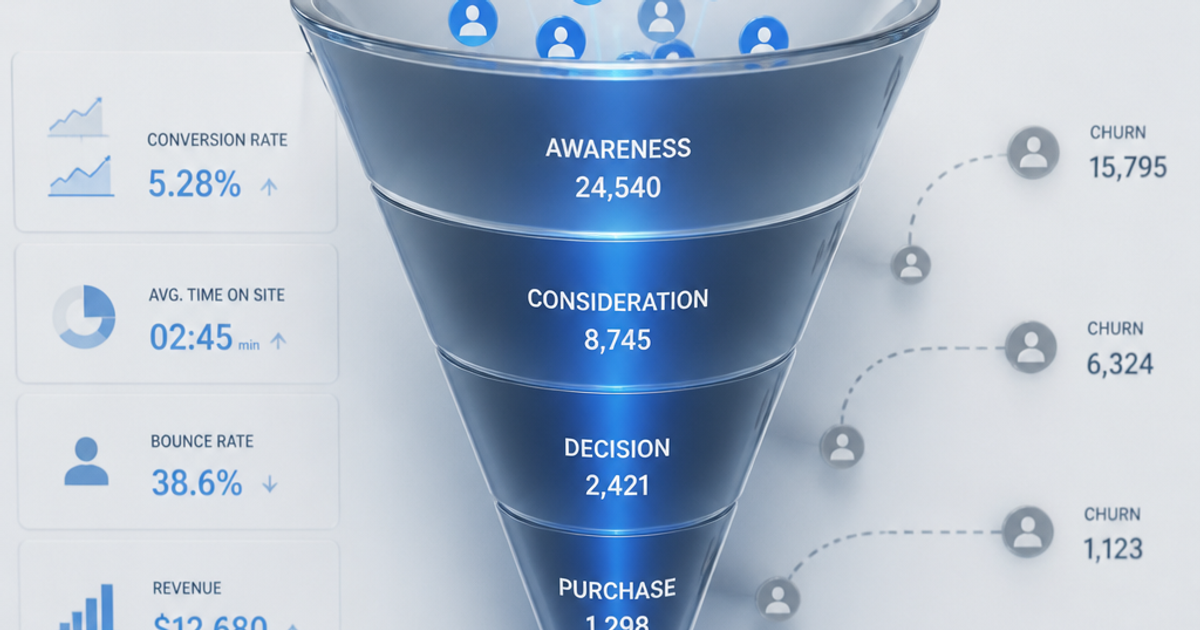
Poor onboarding is one of the leading causes of early-stage customer churn. Around 44% of subscription cancellations happen within the first 90 days, and a significant portion of B2B companies cite poor product adoption during onboarding as a direct cause of customer loss. Getting onboarding right is not a nice-to-have. It is the single most cost-effective retention investment a startup can make.
What Good Onboarding Actually Looks Like
Good onboarding is not a welcome email and a knowledge base link. It is a structured sequence that walks the customer from "I just signed up" to "I have experienced the core value of this product" as fast as possible. That moment, often called the activation point or first value moment, is the threshold a customer needs to cross before they become genuinely retained.
For a SaaS tool, that might be completing their first report, sending their first campaign, or integrating their first data source. For an e-commerce brand, it might be receiving the first order and seeing it match the promise made in the ad. Identify your activation point, then design onboarding to get every new customer there within the first session or the first week.
Onboarding Mistakes That Kill Retention
A common mistake is front-loading onboarding with every feature the product has. Customers do not need to know everything on day one. They need to feel successful quickly. Overwhelming a new user with options and settings is a fast path to abandonment.
Another mistake is treating onboarding as a product problem rather than a marketing problem. The onboarding emails you send, the messages triggered by in-app behavior, the check-in calls your team makes - these are retention marketing activities. They require the same intentional design as any campaign.
Pro tip: Map your onboarding sequence against your churn data. If customers who complete step three stay at twice the rate of those who do not, you have found your activation gate. Prioritize getting everyone through that gate above everything else in the first week.
Retention Marketing Tactics That Actually Work
Retention marketing spans the full customer lifecycle. The tactics below are organized by when they are most effective, not by how impressive they sound on a slide deck. Each one has a specific job to do.
Personalized Email Sequences Based on Behavior
Generic broadcast emails are the lowest-value form of retention marketing. Behavioral emails triggered by what a customer actually does (or stops doing) are among the highest. If a customer has not logged in for 14 days, that is a trigger. If they have used a feature three times this week, that is a trigger for an upsell or a deeper-use tip. Build sequences around behavior, not around your content calendar.
Loyalty and Reward Programs That Reinforce Habit
Loyalty programs work when they reinforce the behavior you want, not when they just hand out discounts. A points system that rewards frequent logins or completed workflows builds product habit. A discount-only loyalty program trains customers to expect lower prices, which erodes margins without building genuine attachment. Design rewards around engagement milestones, not just purchase volume.
Proactive Customer Success Outreach
For B2B startups, proactive outreach from a customer success team or founder is one of the most effective retention tools available. The goal is to reach out before a customer has a problem, not after they file a ticket. This might mean a 30-day check-in call, a quarterly business review, or an automated health score alert that triggers when usage drops below a threshold. Customers who feel proactively supported are dramatically less likely to churn when a competitor comes calling.
Win-Back Campaigns for Lapsed Customers
Not every churned customer is gone forever. A well-designed win-back campaign, combining a personalized message, a clear acknowledgment of what changed, and a reason to return, can recover a meaningful portion of lapsed customers. The key is timing: reach out within 30 to 60 days of churn, when the memory of your product is still fresh. After 90 days, win-back rates drop sharply.
Pro tip: Segment your win-back campaigns by churn reason. A customer who left because of price needs a different message than one who left because of a missing feature. Treating them the same will underperform against both.
Feedback Loops That Create Trust
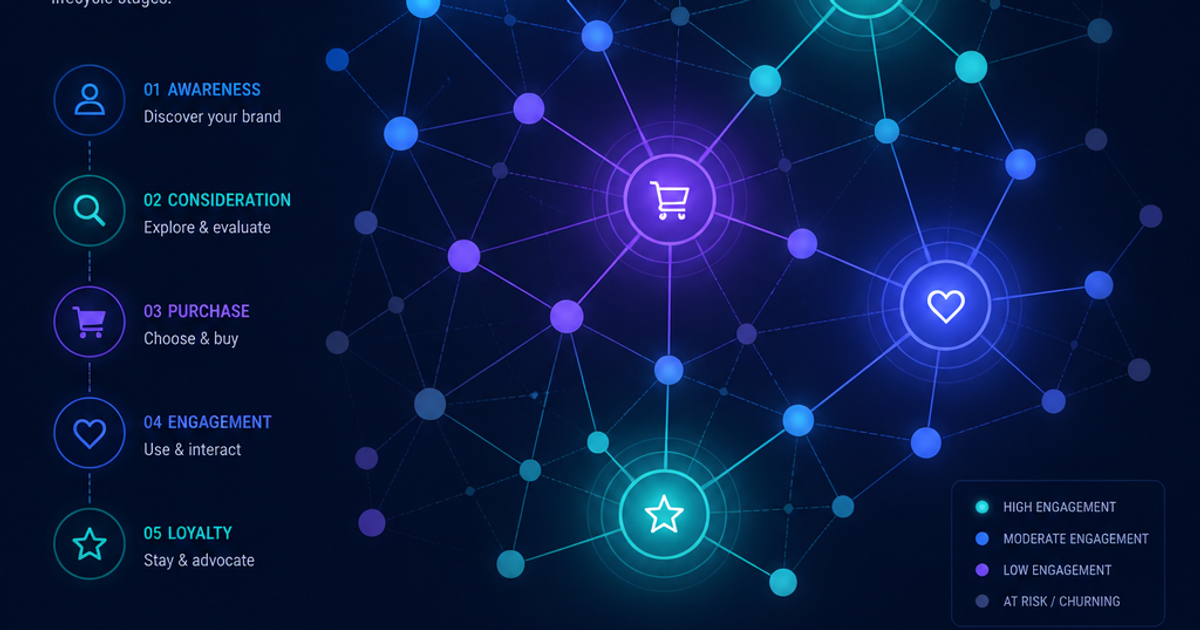
Soliciting feedback through NPS surveys or short in-app questionnaires is the starting point, not the finish line. The retention power comes from closing the loop: taking action on the feedback and then telling customers what you changed because of what they said. Most startups collect feedback and quietly archive it. The ones that publicize their response to customer input build a kind of loyalty that no discount can replicate.
Community Building as a Retention Mechanism
Customers embedded in a product community are significantly harder to churn than isolated users. A Slack group, a user forum, or even a well-run email newsletter that connects customers to each other creates social ties that extend beyond the product itself. When a customer is part of a community, leaving the product also means leaving the community. That is a much higher switching cost than any contractual lock-in.
Comparing Retention Approaches for Startups
Not every retention strategy fits every startup. The right approach depends on your business model, team size, and where most of your churn is happening. Here is a direct comparison of the three most common retention frameworks startup teams use.
Approach · Best For · Key Limitation
Lifecycle Email Marketing (behavioral triggers, onboarding sequences, re-engagement flows) — SaaS and subscription startups with a self-serve model and a large customer base. Scales well without adding headcount. — Only works when you have clean behavioral data and a product that generates meaningful usage signals. Weak with infrequent-purchase products.
Customer Success Management (dedicated CSMs, health scores, proactive check-ins) — B2B startups with mid-market or enterprise accounts, where a single churned customer represents significant revenue loss. High-touch and high-ROI at this level. — Does not scale to thousands of small accounts without automation layered underneath it. Cost-prohibitive for low-ACV products.
Loyalty and Community Programs (points systems, referral incentives, user communities) — Consumer-facing startups and e-commerce brands where purchase frequency and brand affinity are key drivers of LTV. — Takes longer to build meaningful network effects. Poorly designed programs can devalue the product or attract discount-seekers rather than loyal customers.
In practice, the best-retained startups combine all three at different layers: lifecycle emails for the broad base, customer success for the top accounts, and community for the advocates who drive referrals. Start with whichever layer addresses your biggest current churn driver, and build from there.
Metrics You Must Track to Reduce Churn
You cannot reduce churn you are not measuring. The following metrics form the minimum viable retention dashboard for any startup serious about customer retention strategies.
Customer Retention Rate (CRR)
CRR measures the percentage of customers you kept over a given period. It is the inverse of churn rate and the most direct measure of retention health. Track it monthly, and break it down by cohort so you can see whether newer customers are retaining better or worse than older ones. A rising CRR across cohorts is a strong signal that your retention marketing is working.
Net Revenue Retention (NRR)
NRR accounts for both churn and expansion revenue from existing customers. A startup with 100% NRR is breaking even on its existing base. Above 110% NRR means the base is growing through upsells and expansions even before counting new customers. This is the metric that most accurately reflects the health of a subscription or SaaS business, and it is the one sophisticated investors focus on most.
Net Promoter Score (NPS)
NPS measures how likely customers are to recommend your product on a scale of 0 to 10. Customers scoring 9 to 10 are promoters. Those in the 7 to 8 range are passives. Those scoring 6 or below are detractors and represent active churn risk. Track NPS per customer segment and per cohort, not just as a single company-wide number, because aggregate NPS can hide serious problems in specific segments.
Time Between Purchases and Daily or Monthly Active Users
For e-commerce startups, time between purchases signals engagement and repurchase intent. For SaaS, daily active users divided by monthly active users (DAU/MAU ratio) is one of the best behavioral proxies for genuine product engagement. A high DAU/MAU ratio correlates strongly with low churn. When that ratio drops, a re-engagement campaign should trigger automatically.
Common Mistakes Startups Make With Retention
Most startup retention failures follow predictable patterns. Knowing them in advance is cheaper than learning them the hard way.
Over-Promising in Acquisition Marketing
If your ads promise one thing and your product delivers something different or harder to use, churn is baked in before the customer even activates. Setting realistic expectations in marketing is not just honest, it is a retention strategy. Customers who onboard with accurate expectations have a much higher chance of staying through early friction points.
Treating Churn as Inevitable
Some teams accept churn as a natural cost of doing business and stop trying to understand it. This is a mistake. Every churned customer is a data point. Exit surveys, cancellation interviews, and churn cohort analysis will consistently surface patterns you can act on. Treat every churned customer as a signal, not a loss to shrug off.
Building Retention Programs on Top of a Broken Product
No amount of email automation fixes a product that genuinely does not solve the customer's problem. Before investing heavily in retention marketing tactics, make sure the product itself is delivering on its core promise. Retention marketing amplifies whatever is already happening. If the product is weak, retention marketing will slow the bleeding but will not stop it.
Ignoring the Mid-Lifecycle Customer
Most retention programs focus heavily on onboarding (the first 30 days) and win-back (after churn). The customers in the middle - six months in, using the product steadily but not deeply - are often ignored. This is where mid-lifecycle churn quietly builds. A program of feature education, milestone celebrations, and usage-based tips for established customers pays significant dividends that most startups leave on the table.
Frequently Asked Questions
What is the difference between retention marketing and customer success?
Retention marketing refers to the communication campaigns and programs designed to keep customers engaged, such as email sequences, loyalty programs, and personalized offers. Customer success is a team function focused on ensuring customers achieve their goals with the product through direct, often one-on-one, relationships. The two overlap significantly and should be coordinated, but they are not the same. Retention marketing scales through automation; customer success scales through skilled people and processes.
What is a good churn rate for an early-stage startup?
Early-stage startups finding product-market fit may see monthly churn rates of 5 to 10%, which is not unusual at that stage. Once you have a validated offer and a stable customer segment, the target should shift toward under 2% monthly churn. Enterprise-focused startups can typically achieve lower churn than consumer-facing products because contract lengths and switching costs are higher. Always benchmark against your own historical trend and your industry peers, not a universal standard.
How do I identify which customers are at risk of churning?
The most reliable early warning signals are behavioral: a drop in login frequency, a decrease in DAU/MAU ratio, reduced feature usage, or a low NPS score after a recent survey. Many SaaS platforms allow you to build a customer health score that combines these signals into a single indicator. When a customer's health score drops below a threshold you define, trigger a proactive outreach sequence rather than waiting for a cancellation notice.
Should retention marketing be a separate team or part of the marketing team?
At the early startup stage, retention marketing should sit inside the marketing team with a clear owner. It does not need to be a separate department until you have enough customer volume and enough churn to justify dedicated headcount. What matters is that someone owns it explicitly. Retention work that belongs to everyone in theory belongs to no one in practice, and that is how startups end up surprised by their churn numbers every quarter.
What retention marketing tools do startups typically use?
The core toolkit for most startups includes a customer engagement platform for behavioral email automation (such as Customer.io, Klaviyo, or Intercom), an NPS tool (such as Delighted or Typeform), and a CRM that captures customer health data (such as HubSpot or Salesforce). For product analytics underlying the behavioral triggers, tools like Mixpanel or Amplitude are common. The exact stack matters less than having clean data flowing between tools so your retention campaigns can respond to real customer behavior.
Is retention marketing worth investing in before reaching product-market fit?
Before product-market fit, retention data is your most important learning signal, not a growth lever. The question is not "how do we keep customers?" but "why are customers leaving, and what does that tell us about the product?" In this phase, invest in customer interviews and cancellation surveys rather than automated retention campaigns. Save the marketing automation for after you understand why customers stay and why they leave.
How does customer lifetime value connect to retention marketing decisions?
Customer lifetime value (CLV) is directly determined by how long customers stay and how much they spend over that time. A startup that improves retention by keeping customers for an average of 12 months instead of 8 months increases CLV by 50% without changing price or product. This changes the entire unit economics of the business: higher CLV justifies higher CAC, which means you can outspend competitors in acquisition while remaining profitable. Retention marketing is, at its core, a CLV expansion strategy.
What is your biggest retention challenge right now - is it early churn in the first 90 days, mid-lifecycle drop-off, or something else entirely? Share what you are seeing in your startup, I read every comment.
References
- Infobip: 21 customer retention strategies covering onboarding, personalization, loyalty, and churn prevention across the full customer lifecycle
- NetSuite: Retention marketing strategy guide covering key tactics, metrics, and how to reduce customer churn
- PartnerHero: Proven customer retention strategies for reducing churn and building long-term customer loyalty
- CustomerGauge: Average churn rate benchmarks by industry and company maturity stage
- Sci-Tech Today: Customer churn statistics, retention benchmarks, and emerging trends in churn prevention